‘Accenture pets’ for Salesforce’s Dreamforce
Overview
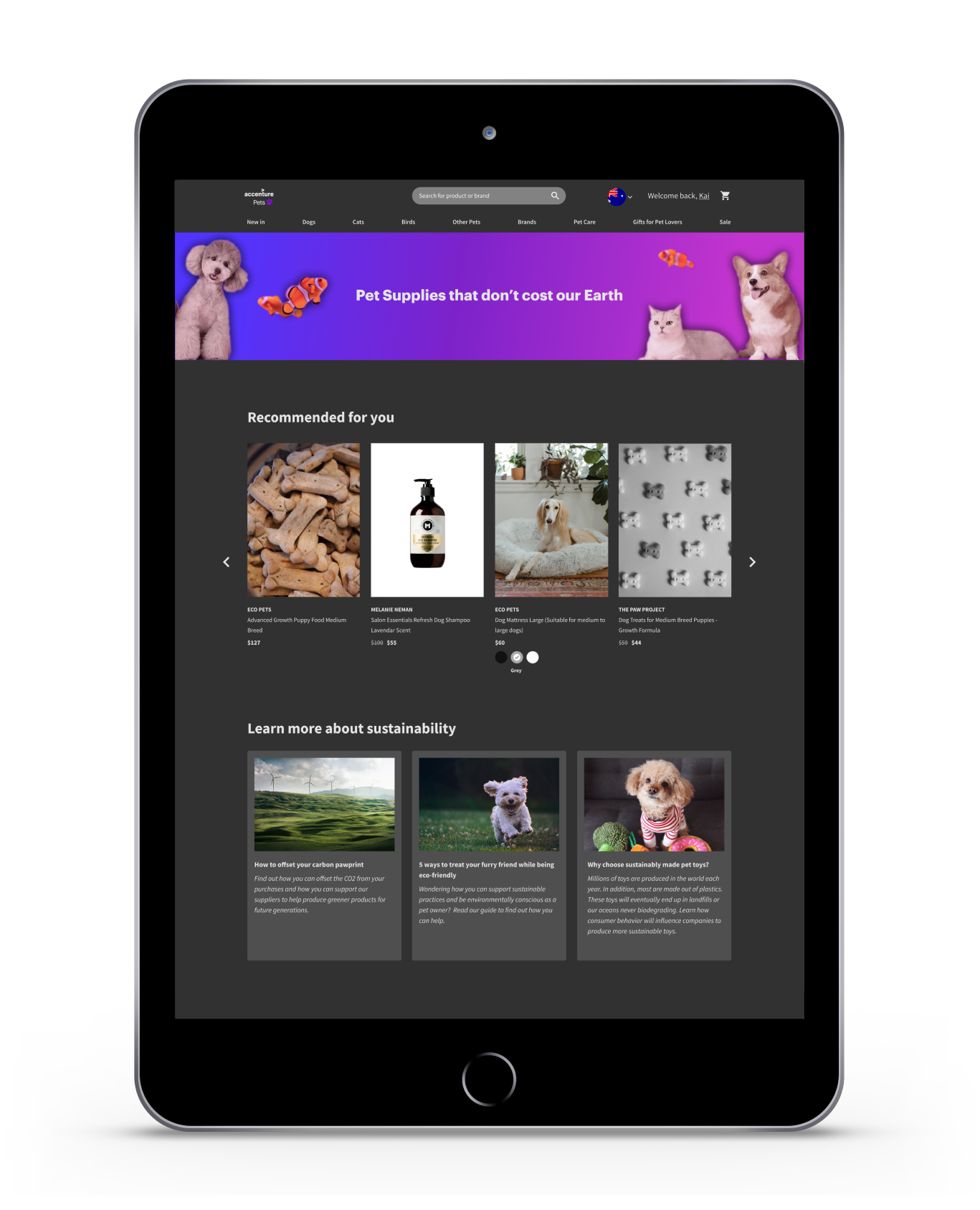
In 2022, Accenture was invited to present at Dreamforce, Salesforce’s World Tour in San Francisco. Our challenge was to demonstrate how sustainability could be meaningfully integrated into the ecommerce journey - not just at a brand level, but directly within the customer experience.

A cross-functional team of approximately 10 inculding strategists, designers and engineers collaborated to design and build a proof of concept (POC): a mock sustainable B2C pet store, Accenture Pets all in the span of 3 weeks.
While team members defined the product line, built the Salesforce storefront and implemented analytics, I led the UI and UX design of the experience, partnering with another designer to elevate the customer journey and embed sustainability into key decision points.
Design objective

Our goal was to move sustainability from a marketing claim to a visible, measurable part of the shopping flow. We asked:
How might we design an ecommerce experience where customers can understand, influence and be rewarded for sustainable choices?
Initial UI Thinking
To ground our approach in proven patterns, I analysed ecommerce brands known for strong sustainability integration, including Patagonia and Allbirds.
From this research, I identified several recurring design principles:
Make environmental impact visible at the product level
Use simple metrics (e.g. carbon 'pawprint') to build transparency
Provide optional but frictionless sustainable actions
Reinforce impact through feedback loops
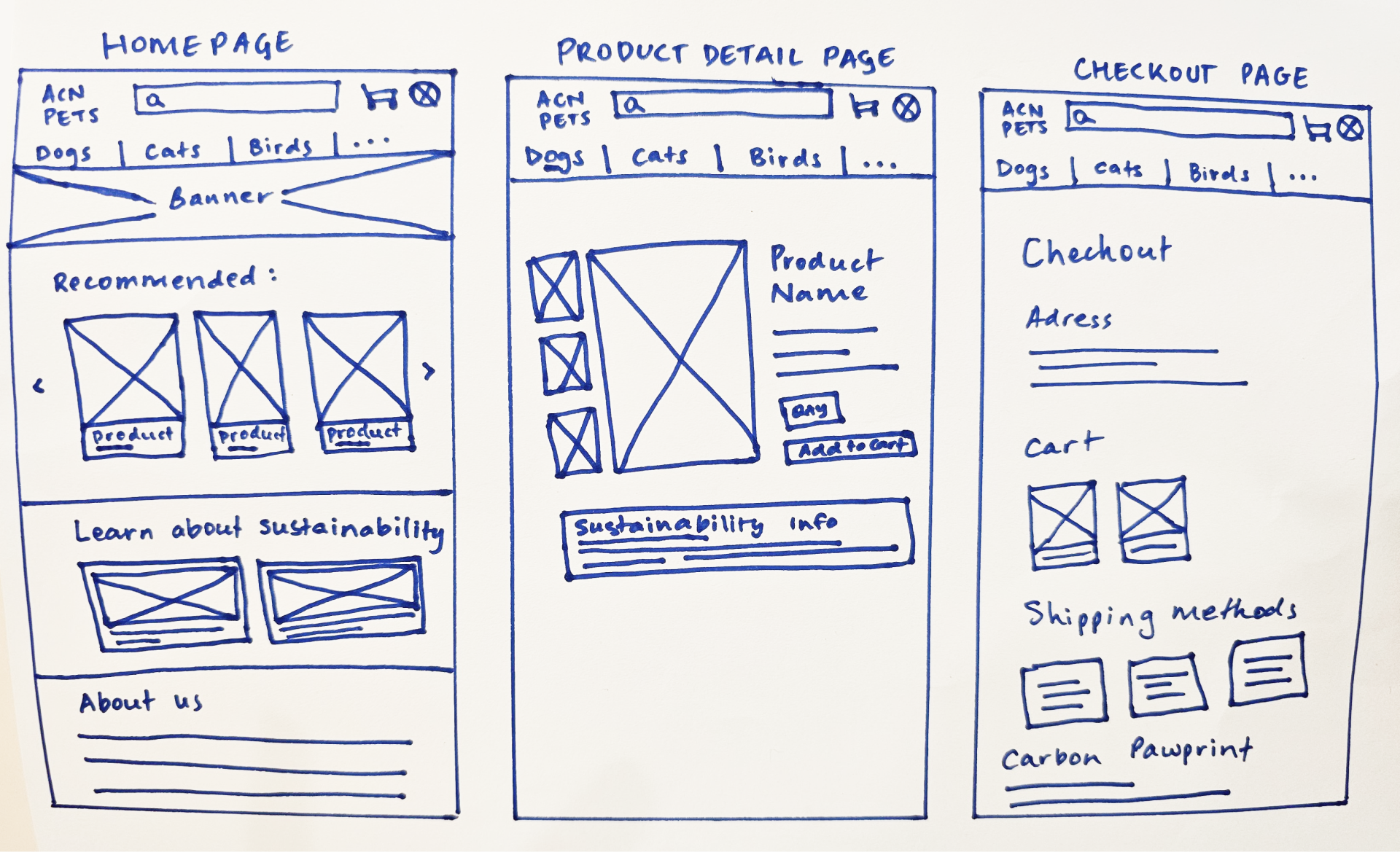
I translated these principles into early paper wireframes covering the homepage, product detail page and checkout flow.
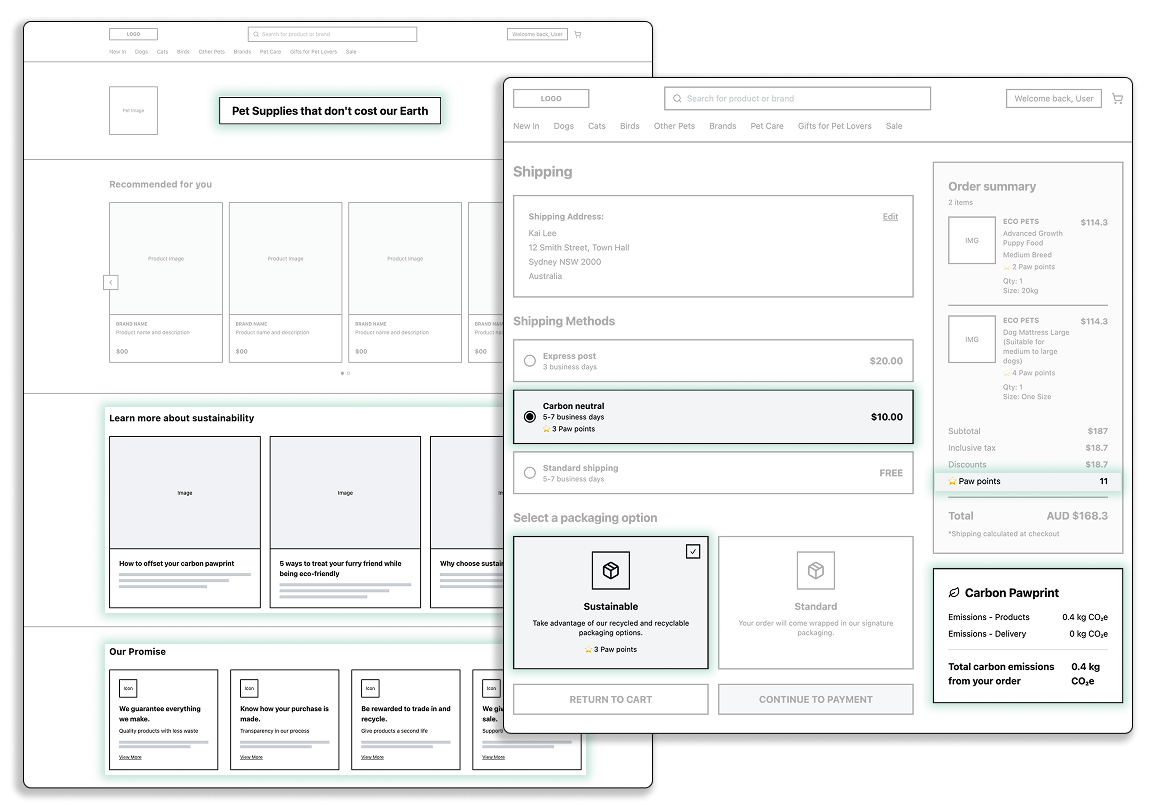
These evolved into low-fidelity digital explorations to validate layout, hierarchy and placement of sustainability signals.
Embedding Sustainability into the Journey
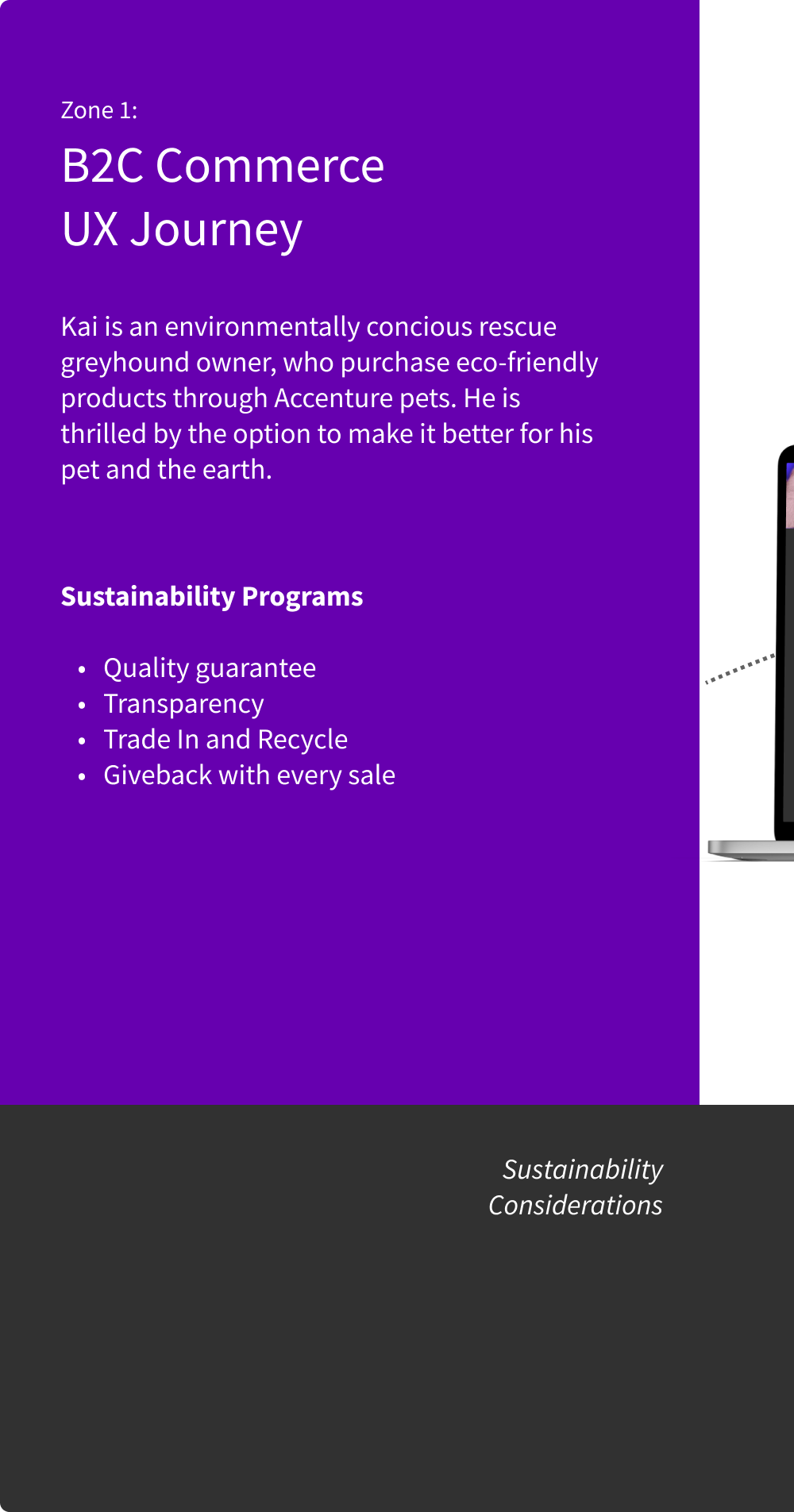
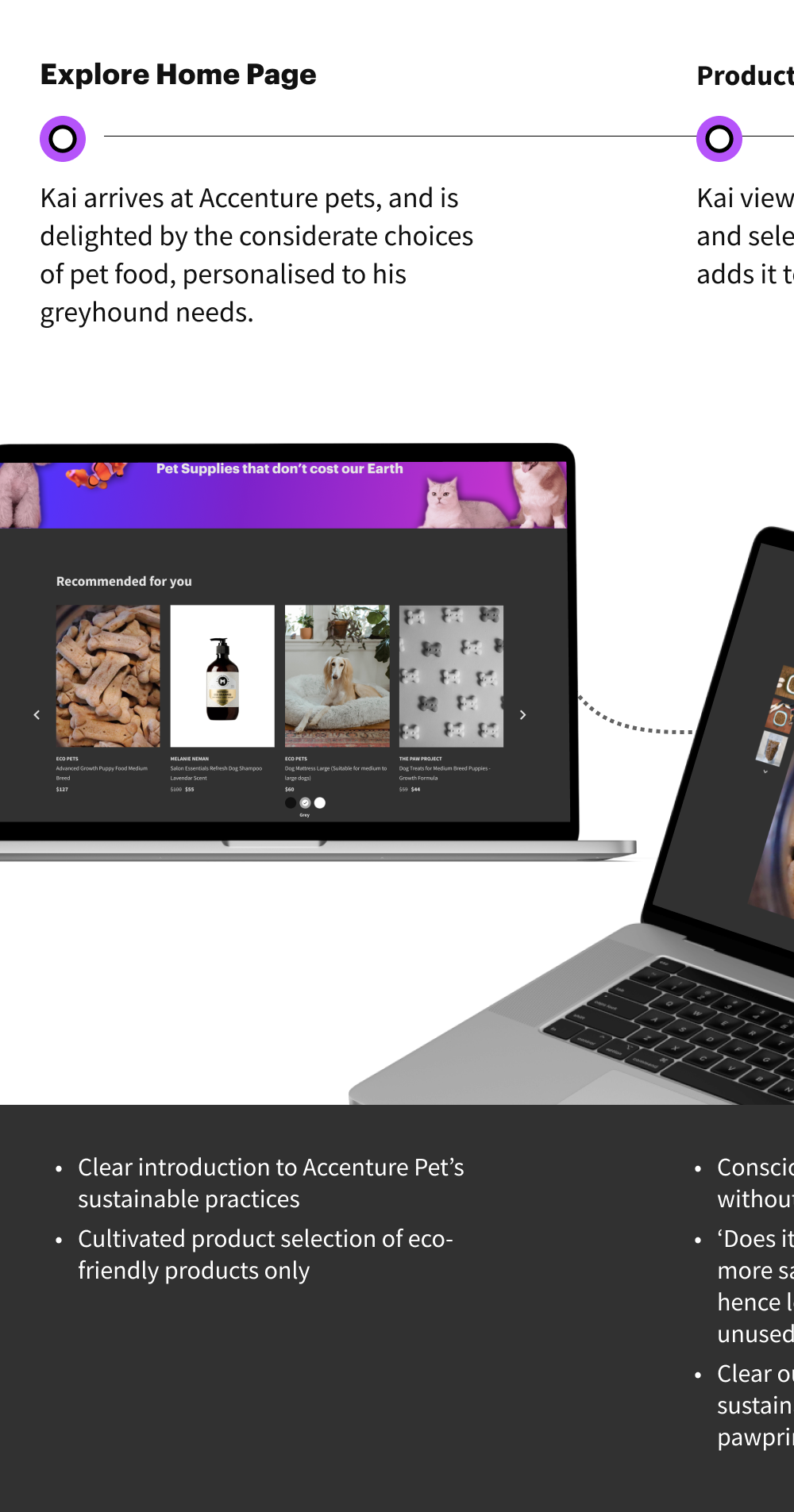
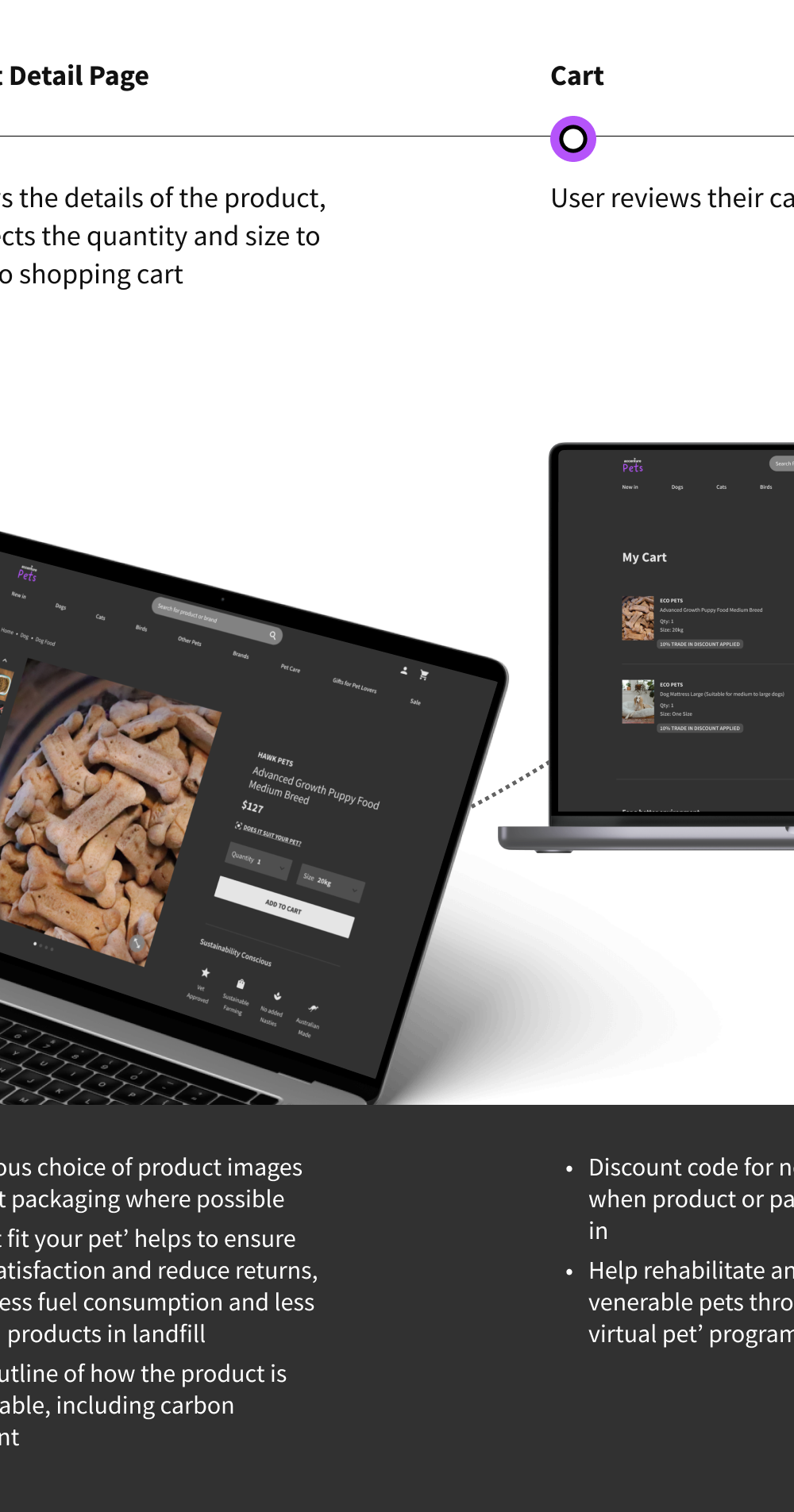
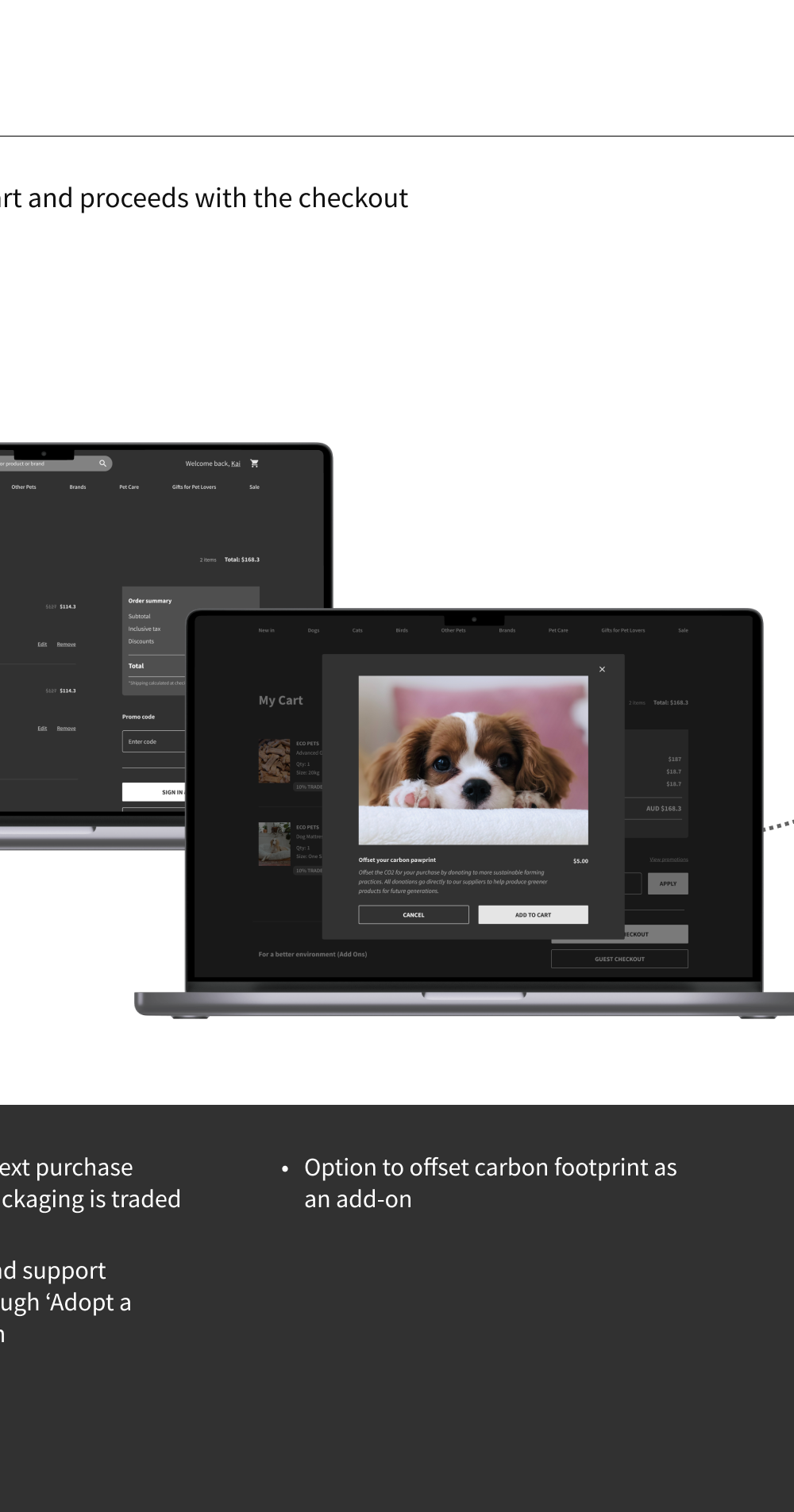
Working with another designer, we created a customer journey map to identify where sustainability could add the most value throughout the shopping experience. This helped us embed sustainability naturally across key touchpoints rather than treating it as a standalone feature.
Final design
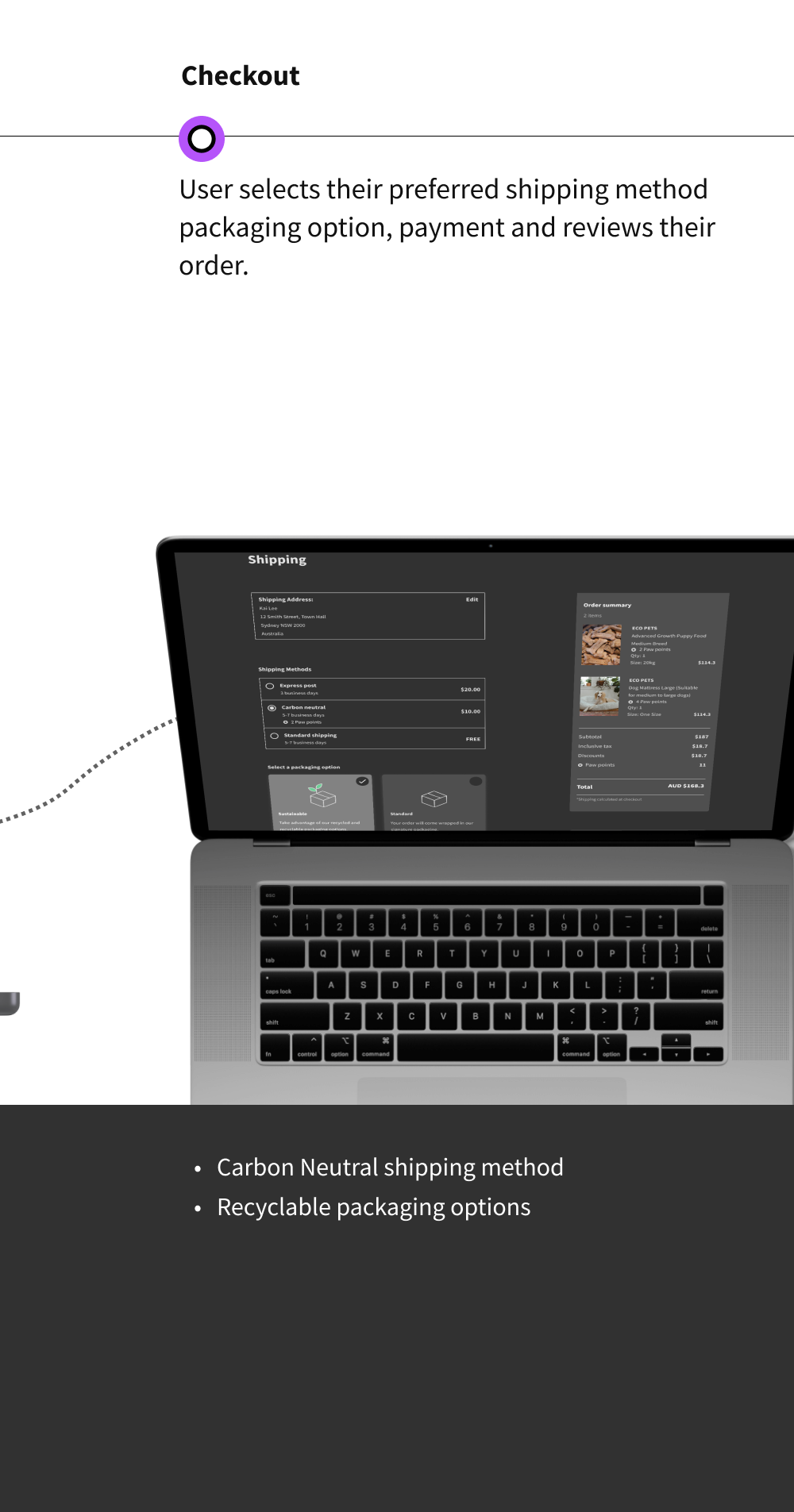
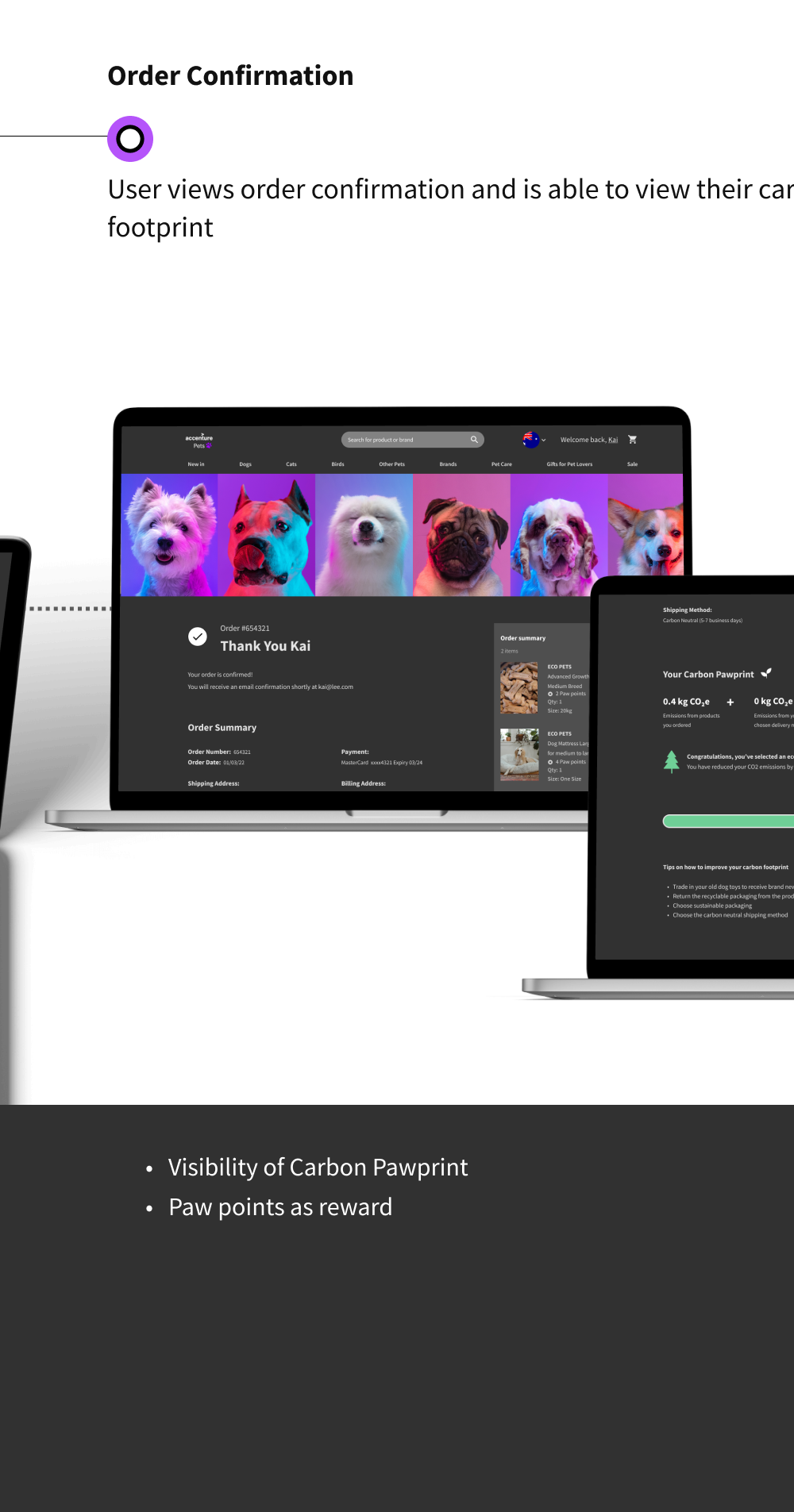
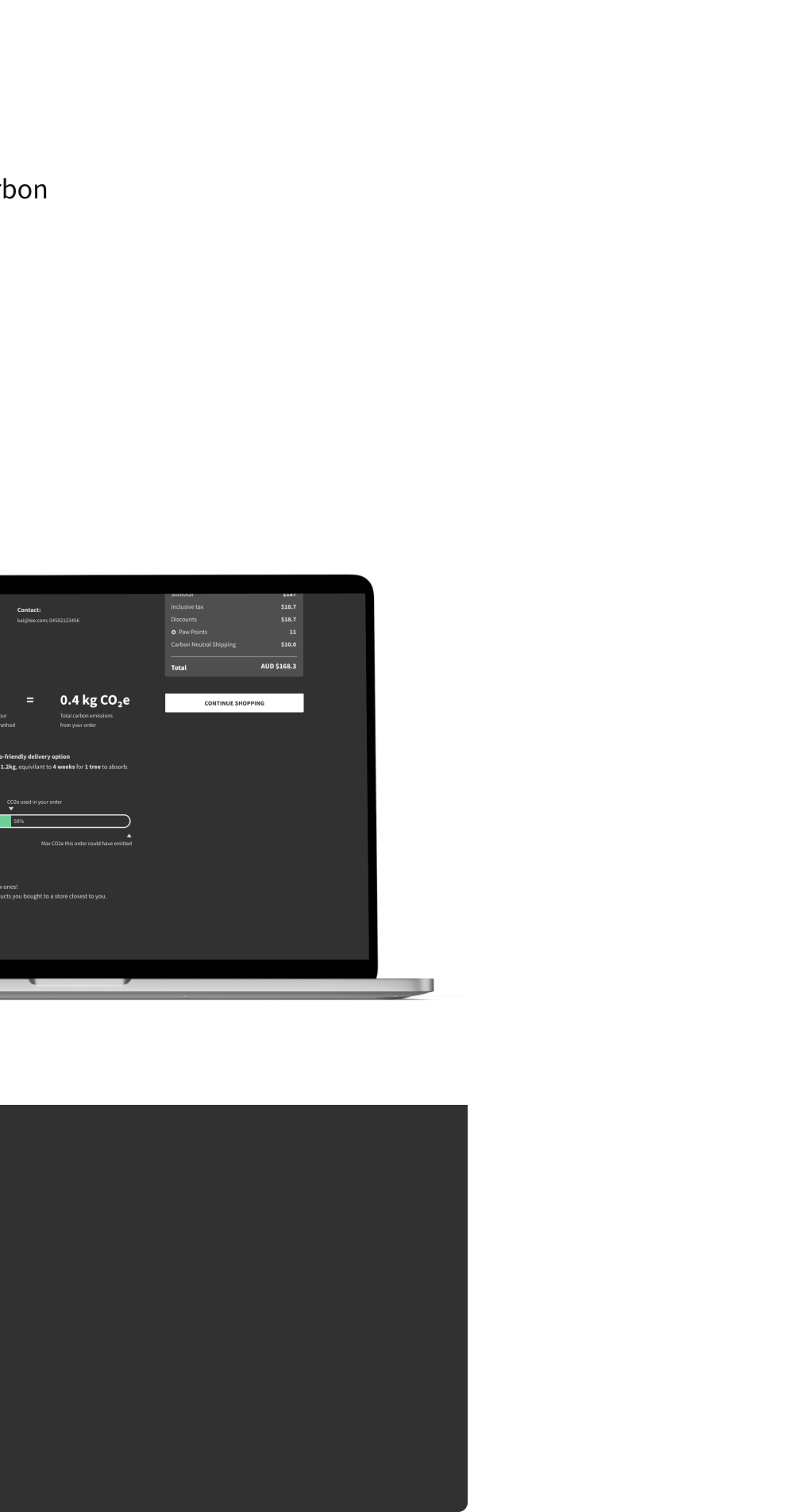
As seen above, rather than isolating sustainability to an “About” page, we embedded it across the core ecommerce flow and included it in our final design:
Product Transparency
The carbon “paw-print” indicator helps customers understand environmental impact
Sustainable Shipping
Environmentally friendly shipping options allows customers to choose lower-emission delivery methods
Behaviour-Driven Loyalty
Additional loyalty points can be earned for taking sustainable actions, reinforcing positive behaviour through tangible rewards.
Offset Initiatives
Customers can opt to offset their purchase impact through verified initiatives, framed as a simple, optional add-on.
Impact
The demo at Dreamforce was well received and generated strong engagement from attendees in San Francisco. The POC was built using Salesforce Commerce Cloud and successfully demonstrated how sustainability can be embedded into ecommerce without compromising usability or commercial objectives.
More importantly, the project reframed sustainability as a customer experience opportunity — showing how thoughtful UX decisions can influence behaviour, increase transparency and build brand trust.